


2. Closet digitization
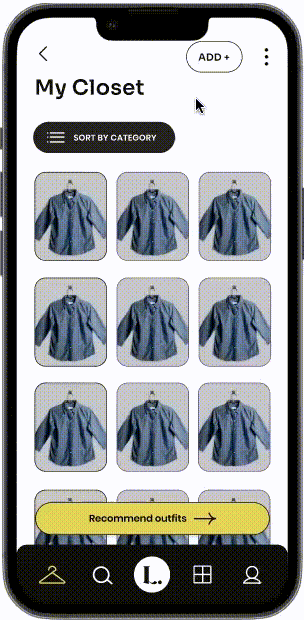
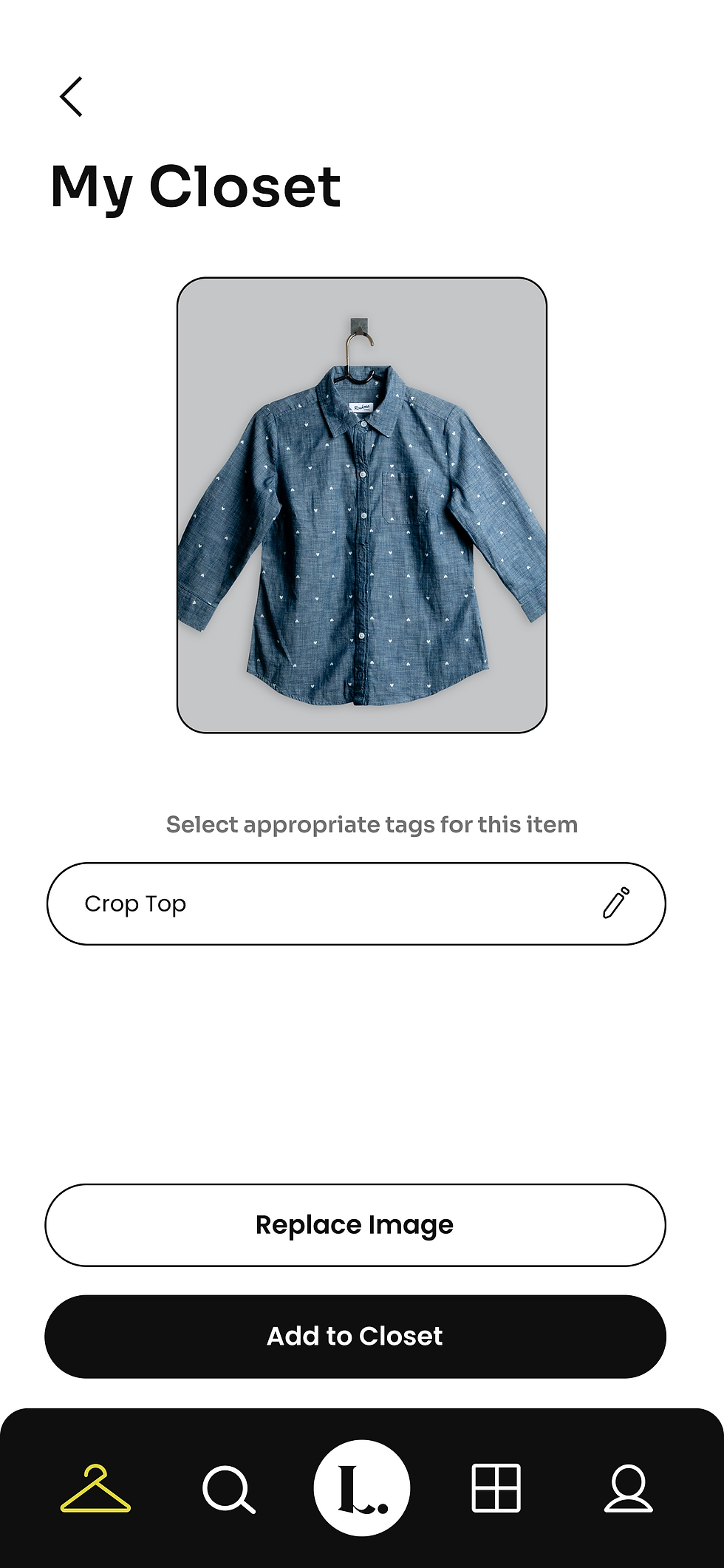
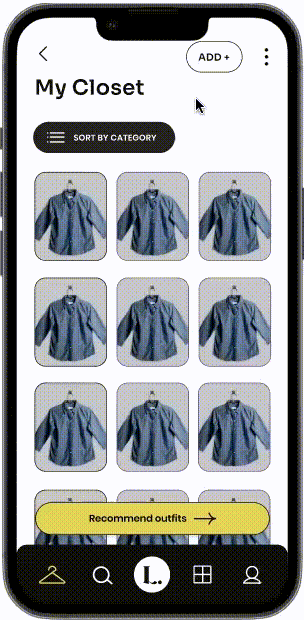
To prevent drop-off, I simplified closet upload: quick photo steps, auto-categorization, and ready-made "template items" like basics. This let users add just enough pieces to start generating outfits fast - no full closet digitization required.




26 year old Micro-influencer → needs sustainable, brand-aligned looks
Madhuri Reddy, Chennai
Soniya Mehra, Bangalore
34 year old working mom with no time to shop → needs effortless, polished looks for a conference
19 year old medical student. With low time, messy closet → needs quick styling for friends birthday
Neha Gupta, Mumbai
Young women feel they have “nothing to wear” because styling their existing closet is overwhelming — and current apps only push shopping, not solutions.
Pain Points
-
Decision fatigue
-
Hard to style what they own
-
Messy, forgotten closets
Market Gaps
-
Shopping feeds, not real styling
-
Generic inspo
-
No connection to the user’s actual closet
Opportunity
Help users style what they already own through a simple, guided closet experience.
Supports longer labels and complex flows, improves clarity and scannability, replaces inconsistent custom steppers, reinforces ‘one step = one task,’ reduces cognitive load with a top-to-bottom layout, and creates a unified, future-proof workflow pattern.”
I led the onboarding, workflows, and styling logic for LehLah, a fashion-tech app that helps women transform their existing wardrobe into styled, wearable looks. I built an inclusive, supportive onboarding experience and a quick style-signal flow that produced personalized recommendations immediately. This work became the UX backbone of the product, shaping how closet items, recommendations, and shop-able looks worked together across the experience.
Introduced a vertical variant for long labels and complex flows, added an opt-in heading model for proper grouping, and reinforced a clear ‘one step = one task’ mental model. Standardized DOM, keyboard, and screen-reader behavior, and aligned patterns with Cisco design systems while staying consistent within Splunk.
25,000 + Daily Active Users
B2C
Mobile
The problem
Research process highlights
Discovery - interviews, audits, Design System research, hierarchy mapping.
Alignment - Worked with accessibility, engineering, and Cisco Design System teams.
Delivery - Built the vertical variant, iterated with engineering, and documented.
The process

Product impact
Before

After
Delivered a standardized vertical Step Bar that replaced ad-hoc versions, unified workflows, and reduced design/engineering debt. Added a clear, accessible heading model, aligned patterns with Magnetic, and strengthened ARIA, DOM, and keyboard standards through close engineering and a11y partnership.
Result
-
Uncontrolled Flexibility
-
Accessibility and interaction problems
-
Alignment without forced parity
-
Technical constraints
Challenges
Zero-to-One Experience Design
25,000 + Daily Active Users
A desire for sustainable fashion, but no easy entry point
-
Existing apps offered:
-
Endless shopping feeds
-
Generic outfit inspiration
-
Long, impersonal onboarding
-
No tie-in to the user’s actual closet
-
None helped users style what they already own.

I evaluated Stitch Fix and Nykaa across
-
UX consistency
-
Cognitive load
-
Onboarding complexity
-
Styling logic transparency
-
Visual hierarchy
-
Constraints & affordances
Key insights:
-
Long onboarding = high drop-off
-
Inconsistent UI = distrust
-
Too many choices = decision fatigue
-
No closet focus = no true personalization
This validated our approach to:
-
Keep onboarding light
-
Treat consistency as a first-class principle
-
Prioritize closet items as the main experience
Competitor & interface analysis
Design principles broken

Missing constraints increased drop-off risk (Stitch Fix)
Stitch Fix’s quiz offered no way to skip, go back, or exit, forcing users through a long flow. This lack of navigational constraints created friction and likely increased abandonment.
Across the quiz, Stitch Fix used multiple button styles, icon treatments, and color variations, leading to visual and behavioral inconsistency. Inconsistency undermines usability, delays recognition, and weakens brand trust - especially in a high-friction onboarding flow.
Inconsistent UI patterns broke trust (Stitch Fix)
Cognitive overload slowed decision-making (Nykaa)
Nykaa’s landing experience surfaced too many options at once, violating Hick-Hyman’s law. Excessive visual clutter increases cognitive load, making decisions harder and slowing progression
User journey mapping
Consumer Fashion App
Designing the 0 to1 mobile experience for an intelligent styling engine
Branding
Overview
I led the onboarding, workflows, and styling logic for LehLah, a fashion-tech app that helps women transform their existing wardrobe into styled, wearable looks. I built an inclusive, supportive onboarding experience and a quick style-signal flow that produced personalized recommendations immediately. This work became the UX backbone of the product, shaping how closet items, recommendations, and shop-able looks worked together across the experience.
The problem
Young women have a closet full of clothes… but “nothing to wear.”
This wasn’t about lack of clothing - it was about:
-
Decision fatigue
-
Not knowing how to put pieces together
-
Messy or unorganized closets
-
Uncertainty about what fits, flatters, or feels like them
LehLah’s opportunity: Bring together personal styling, closet digitization, and ethical shopping — in one emotionally safe, easy-to-use experience.
Research process highlights
User Personas
Based on market research and client data, we defined three primary personas. These personas shaped the decision to - keep onboarding fast, emphasize sustainability, prioritize closet-based looks first, offer purchasable pieces as secondary

How might we gather body, fit, and style preferences in a way that feels supportive — not judgmental — while keeping onboarding fast?
Users needed personalized outfits immediately, but traditional fashion onboarding (body images, too many questions, size charts) often creates discomfort or comparison.
I needed to design an onboarding flow that was:
Emotionally safe • Non appearance-based • Fast and frictionless • Informative enough to power meaningful recommendations from day 1
Challenges
On-boarding
To make onboarding psychologically safe, I replaced real-body photography with abstract silhouettes, used conversational microcopy, and kept each screen intentionally simple to minimize cognitive load. This approach helped users feel understood rather than judged, removing comparison and bias from the experience. The inclusive tone established here went on to shape the product’s feel, iconography, color system.


Most users never finish digitization if it feels tedious. I designed an experience that: Uses simple upload steps, auto-categorizes items, Lets users pick from "templates" or common items found in closets such as a black dress or white T-shirt. The goal was to get just enough items uploaded to generate meaningful outfits quickly.
Closet digitization




Result
-
1,500+ organic downloads in the first month
-
800+ daily active users
-
Higher onboarding completion rates after redesign
-
Faster look-generation due to clean logic mapping
-
Stronger trust from users because onboarding felt respectful
-
A scalable UX + component system used beyond V1
Impact
LehLah evolved into a creator-powered styling ecosystem.
From my early design foundations — onboarding, closet logic, and modular components, the platform later grew to include:
-
Micro-influencer collaboration tools - creators could promote looks, style pieces from their own closets, and drive purchases from small brand
-
A personalized feed powered by styling rules - the system I initially designed expanded into a full discovery feed.
-
Brand partnerships and curated storefronts - small businesses could be recommended based on the user’s closet gaps and preferences.
-
Shopping + closet hybrid recommendations - users could see looks built from: Their own closet, Influencers they follow, Brands that match their aesthetics, Sustainable labels
-
A stronger community layer - LehLah became a place to discover trusted creators, styling inspiration, and ethical brands — not just a utility app.
Scale



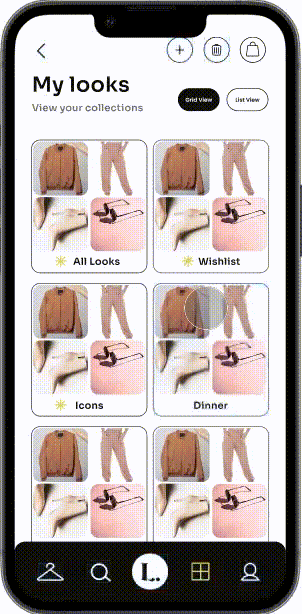


On-boarding
Closet
Cart
Looks
Account
Feed


Young women have full closets but still feel they have "nothing to wear"- driven by decision fatigue, messy closets, and no help styling what they already own. Existing apps offer generic Inspo, long onboarding, and zero connection to user's actual closets or sustainability goals.
The problem
I led onboarding, workflows, and styling logic for LehLah, shaping the core UX that turned users’ existing wardrobes into personalized, wearable looks.
Consumer Fashion App
User personas
Research highlights
Based on market research and client data, we defined three primary personas. These personas shaped the decision to - keep onboarding fast, emphasize sustainability, prioritize closet-based looks first, offer purchasable pieces as secondary
1. Neha Gupta, Mumbai: 19 year old medical student. With low time, messy closet → needs quick styling for friends birthday
2. Soniya Mehra, Bangalore: 34 year old working mom with no time to shop → needs effortless, polished looks for a conference
3. Madhuri Reddy, Chennai: 26 year old Micro-influencer → needs sustainable, brand-aligned looks
Competitor & interface analysis
Evaluated Stitch Fix + Nykaa for UX consistency, cognitive load, onboarding, styling logic, and hierarchy. Key insights: long onboarding causes drop-off, inconsistent UI breaks trust, too many choices create fatigue, and no closet focus limits personalization. This validated a lighter onboarding and a closet-first, consistency-driven approach.
1. Stitch Fix forced users through a long, required flow, increasing friction and drop-off.
Design principles broken


2. Stitch Fix's inconsistent buttons, icons and colors created UI distrust and weakened the onboarding experience.


3. Nykaa's overcrowded landing page overwhelmed users with too many choices, slowing decisions and progressions.


Journey mapping

Users needed personalized outfits immediately, but traditional fashion onboarding (body images, too many questions, size charts) often creates discomfort or comparison.
Challenges
1. On-boarding
I replaced real-body photos with abstract silhouettes, used warm conversational copy, and kept each screen minimal to lower cognitive load and reduce judgment/ comparison. This created a safer, more intuitive introduction that shaped the app's overall tone and visual language.


On-boarding
Results
Closet
Cart
Looks
Account
Challenges
Feed
-
1,500+ organic downloads in the first month
-
800+ daily active users
-
Higher onboarding completion rates after redesign
-
Faster look-generation due to clean logic mapping
-
Stronger trust from users because onboarding felt respectful
-
A scalable UX + component system used beyond V1
Impact
LehLah grew into a creator-powered styling ecosystem. The foundations I designed—onboarding, closet logic, and modular components—scaled into:
-
Creator tools: micro-influencers could style looks from their closets and promote small brands.
-
Personalized feed: the styling rules I built evolved into a full discovery feed.
-
Brand partnerships: curated storefronts recommending small businesses based on closet gaps.
-
Hybrid recommendations: looks built from a user’s closet, creators they follow, and aligned brands.
-
Community layer: a space to discover trusted creators, styling ideas, and ethical labels.
Scale

Nishka.jiandani@gmail.com
Tel. (415) 610 6284
San Francisco, CA